

Blog
A high-tech enterprise specializing in the research and development, production, and import and export trade of rescue equipment

Contact Information
Phone:86 010-51284966
Phone:86 18518110097
E-mail:bjsbl_sale@163.com
Address: Room 403, Building B, Xinhua International Center, Huaxiang, Fengtai District, Beijing
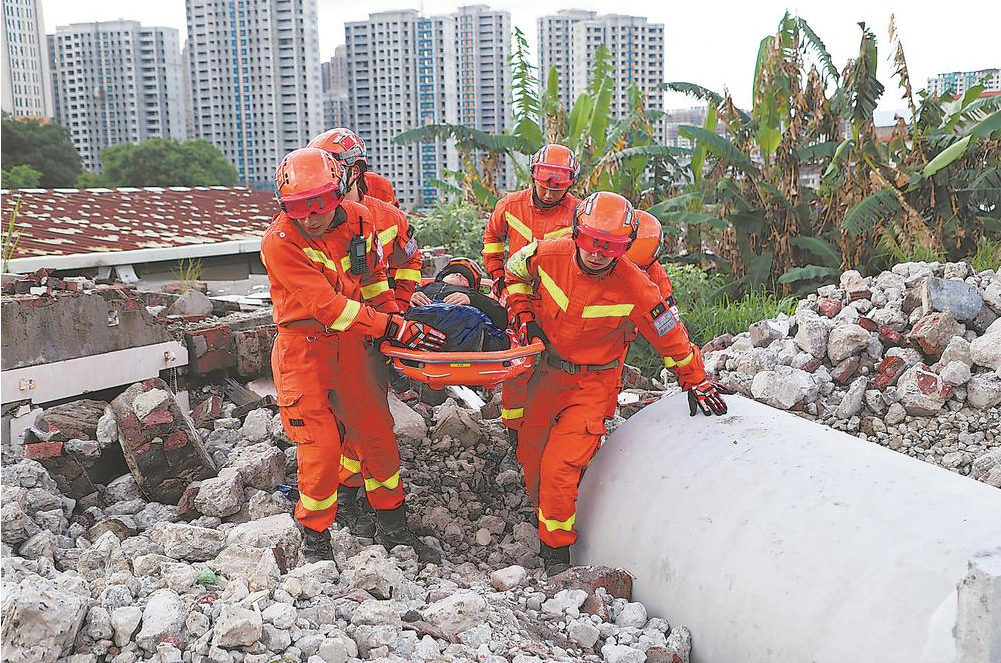
What is the working principle of an audio life detector?
2022-01-19
Audio Life Detector It is a sound detector designed to detect and locate survivors trapped in structures buried under earthquakes, explosions, landslides, mining accidents, or building collapses. The life detector can detect these life signals by detecting special tiny vibrations through sensors.
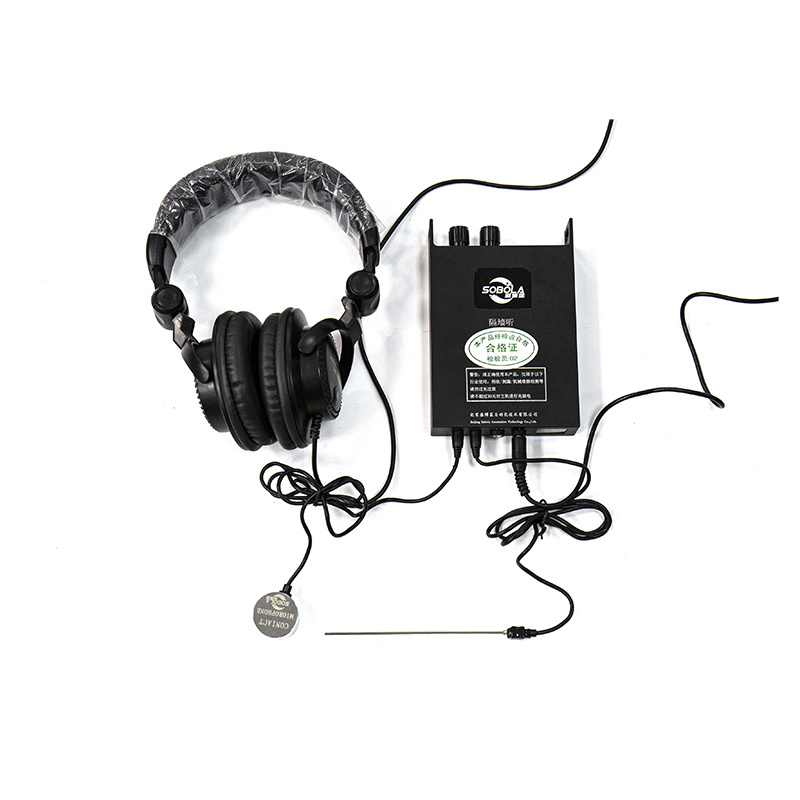
Audio Life Detector What is the working principle? Let's analyze it together.
The audio life detector uses special microelectronic processors to identify tiny vibrations propagating through air or solids, suitable for locating survivors trapped under concrete, debris, or other solids. It can accurately identify survivors' sounds; sounds, knocks, carvings, tapping, etc. At the same time, it can filter out ambient background noise. The process of searching for survivors after a disaster is a race against time. Life detectors can help rescuers locate survivors who are moving, knocking, or calling for help.
Experience shows that survivors buried under collapsed buildings can often hear rescuers, but rescuers cannot hear them. Concrete and rubble block all sound waves. However, if survivors can knock, scratch, or move, the collapsed structure can still effectively transmit these sounds. These sounds are inaudible to the human ear, but they can be heard by Audio Life Detector electronic auditory devices.
1. Dual input enhances sensor flexibility. Use two sound search probes simultaneously for stereo comparison.
2. The audio line recording function can record the past 5 minutes of sound, allowing for sound playback comparison.
3. Filters are used to reduce noise.
4. To create stereo contrast in the headphones, two channels can be selected to form stereo sound. 5. The display panel can simultaneously display the relative strengths of 6 signals, accurately distinguishing the strongest signal. The highest point of the signal bar indicates the maximum amplitude reached by the sensor.
6. The battery is replaceable and can use rechargeable lithium batteries and the detector's strap battery pack. The detector stands with thousands of rescuers worldwide.
7. The improved new headphones allow for two-way communication through the audio monitoring probe. A contact intercom device is also provided for communication between two operators.
8. The sound sensor can be connected to a sensor cable or penetrate the interior of the rubble layer through an optional telescopic probe.
9. Omnidirectional audio sensor, sensing frequency: 1-3000Hz can simultaneously receive 2, 4, 6 sensor information, and the spectrum can simultaneously display two sensor information.
10. Equipped with a small radio, it can communicate with survivors.

Contact Information
Phone:8618518110097
E-mail:bjsbl_sale@163.com
Address: Room 403, Building B, Xinhua International Center, Huaxiang, Fengtai District, Beijing
- Official Account -
- Business Inquiry -


