

Blog
A high-tech enterprise specializing in the research and development, production, and import and export trade of rescue equipment

Contact Information
Phone:86 010-51284966
Phone:86 18518110097
E-mail:bjsbl_sale@163.com
Address: Room 403, Building B, Xinhua International Center, Huaxiang, Fengtai District, Beijing
What is the function of an infrared life detector?
2021-09-30
A large amount of life safety information is contained within the body. This information is primarily reflected on the body's external structures through various sensory methods, such as sound wave frequencies, ultrasound, radio waves, and light waves. Different frequencies of these waves naturally produce different sensations. This underground life safety detector simply distinguishes different life safety patterns appearing on the display screen based on different waveforms. Therefore, various detectors have been developed. Generally, detectors can be divided into optical detectors, infrared life detectors, and sonar detectors.
The underground life safety detector is an infrared life detection device developed by combining radar detection technology and life science research technology. The key is to apply the basic principle of radio wave reflection surfaces. Based on various micro-movements caused by human life activities, relevant information on normal breathing and heart rate can be obtained from these micro-movements, thereby judging the existence of life safety. Radar detection is now the world's leading life detector. Its active detection method makes it less susceptible to key factors such as temperature, environmental humidity, low-frequency noise, and construction site terrain. The continuous transmission system of electromagnetic induction data signals enhances its area detection function.
1. Lower the sensor box of the infrared life detector towards the gravel, then retreat more than 6 meters, but only at intervals of 15 meters (the transmission distance between the PDA and the sensor cannot exceed 20 meters).
The wireless controller only needs 30 seconds to check for movable and normal breathing, but a longer time can improve the thoroughness of the check. It can also display the distance between victims.
After 3 minutes, the sensor can be moved to other points in the search array.
2. A single sensor can only provide the distance between victims, not their specific location. This is also because the "viewpoint" of radar detection widens or narrows depending on the different materials at the construction site.
For example, victims may be 2 meters away from the wireless antenna, but their exact location below is uncertain. If the material at the construction site is wet sand, the victims are likely to deviate from the specific vertical position by 50 degrees, while if it is dry sand or concrete debris, the field of view may be much wider.
3. Because we don't know when misfortune will strike, daily training is particularly important. In this way, operators can become familiar with the operation of the system. The operating system of the portable computer and the PDA battery must always be fully charged.
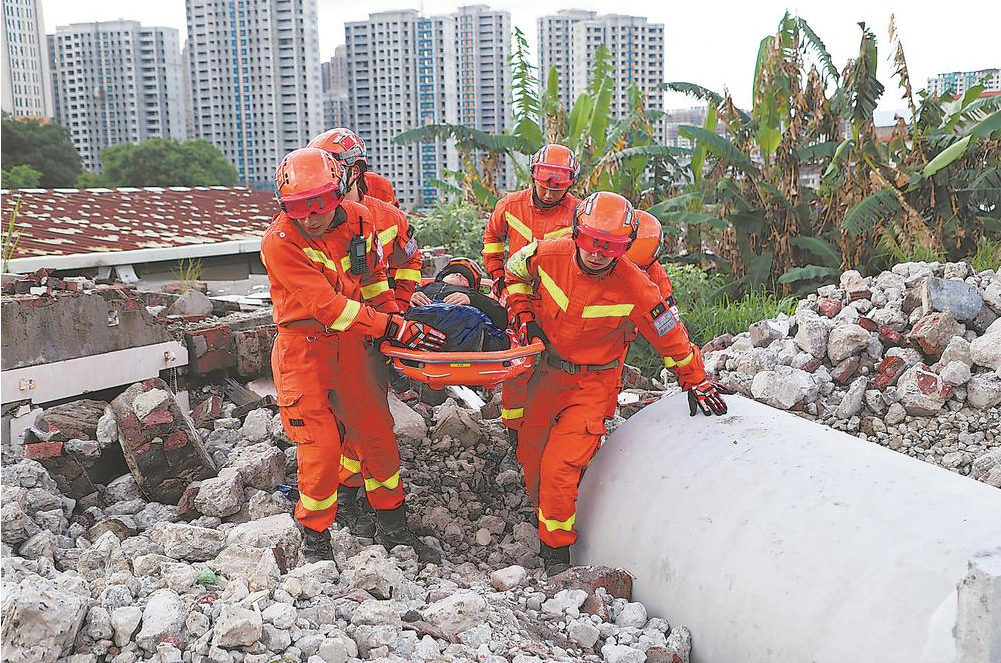
The infrared life detector is suitable for rescue personnel in challenging rescue operations in confined spaces and for situations where conventional methods are difficult, such as providing feedback on the condition of trapped personnel in confined spaces such as collapsed buildings, deep wells, and mines; searching for missing persons in deformed vehicles, aircraft, ships, train collisions, and places difficult to see with the naked eye, sewers, mines, and underground locations. It greatly facilitates search and rescue personnel.
The infrared life detector is suitable for rescue operations in rubble after earthquakes, collapses, and building collapses. It is suitable for fire departments, municipal departments, mine rescue organizations, etc.
Contact Information
Phone:8618518110097
E-mail:bjsbl_sale@163.com
Address: Room 403, Building B, Xinhua International Center, Huaxiang, Fengtai District, Beijing
- Official Account -
- Business Inquiry -


