

Blog
A high-tech enterprise specializing in the research and development, production, and import and export trade of rescue equipment

Contact Information
Phone:86 010-51284966
Phone:86 18518110097
E-mail:bjsbl_sale@163.com
Address: Room 403, Building B, Xinhua International Center, Huaxiang, Fengtai District, Beijing
Types and Applications of Life Detectors
2022-09-13
Types and Applications of Life Detectors
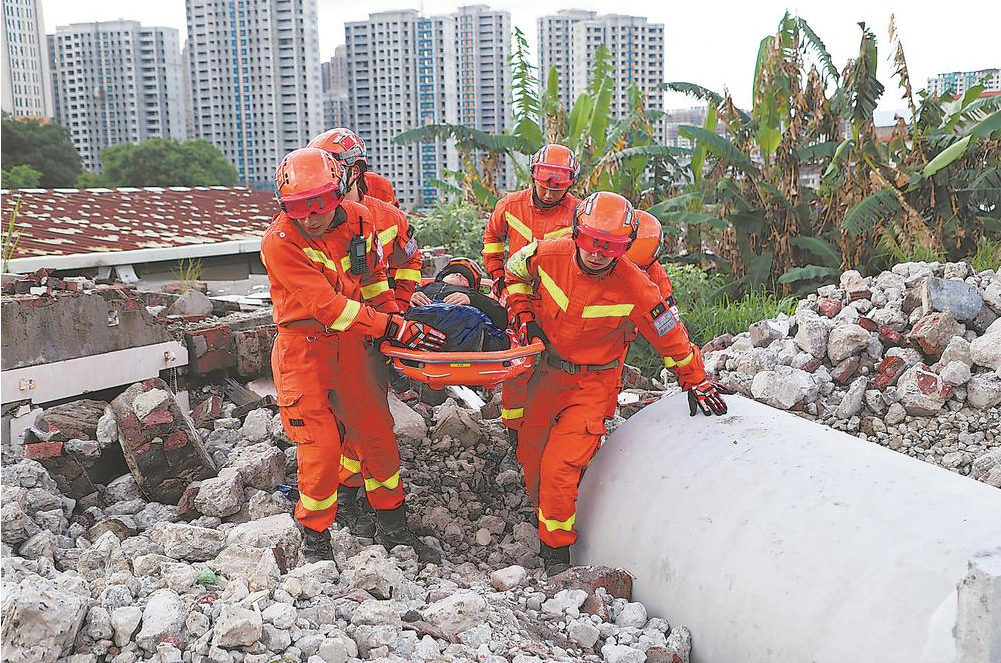
Life detectors are classified by function as: : Video life detectors, audio life detectors, radar life detectors 、 And micro-vibration life detectors. Suitable for earthquake, collapse, and building collapse rescue operations, Or other scenes where personnel are hiding. General applications in Emergency management 、 Fire rescue Mine rescue 、 Border checks, troops And other agencies.
Video Life Detector Mainly based on video principles, using visible light transmitted through sensors to the display screen to observe the scene in front of the probe in real time. It generally consists of a video host, a hand-held telescopic pole, and a video probe. Video life detectors are also often called snake-eye life detectors. Early video life detectors only had video detection capabilities, but with the development of technology, the functions of video life detectors have increased. They have real-time voice intercom functions, infrared night vision functions, 360° rotation function, waterproof function, and thermal imaging function, etc. Video life detectors are mainly used at the scene of a collapse rescue, using the probe to reach the trapped personnel's location to communicate with them.
Audio Life Detector Mainly based on acoustic wave principles, A rapid search and rescue system that integrates vibration signal listening and communication with trapped personnel. Using a special microelectronic processor, it can identify tiny vibrations propagating in air and solids, suitable for searching for survivors trapped under concrete debris and other solids, and can accurately identify sounds from survivors such as shouting, slapping, scratching, and knocking. It generally consists of an audio probe, a host, and noise-reducing earphones. It can be used for earthquakes, landslides, avalanches, and mine rescue operations.
Radar Life Detector Mainly based on electromagnetic wave principles, it analyzes and judges the existence and specific location of living bodies based on the time-domain Doppler echo generated by human movement on the radar signal. At the same time, it uses the strong penetration of ultra-wideband pulse radar, combined with professional radar signal processing algorithms, to achieve the purpose of rapid search and detection. A radar life detector generally consists of a radar host and a hand-held tablet. It is often used in earthquake rescue, border checks, counter-terrorism, and emergency response.
Micro-vibration Life Detector Mainly based on vibration principles, it cannot be used in rescue operations, but mainly for life detection in containers or vehicles. It relies on collecting micro-frequency vibration waves from human breathing or heartbeat to determine the existence of a living body. It generally consists of a probe and a host. It is mainly used in prisons, detention centers, checkpoints, and ports.

Contact Information
Phone:8618518110097
E-mail:bjsbl_sale@163.com
Address: Room 403, Building B, Xinhua International Center, Huaxiang, Fengtai District, Beijing
- Official Account -
- Business Inquiry -


