

Blog
A high-tech enterprise specializing in the research and development, production, and import and export trade of rescue equipment

Contact Information
Phone:86 010-51284966
Phone:86 18518110097
E-mail:bjsbl_sale@163.com
Address: Room 403, Building B, Xinhua International Center, Huaxiang, Fengtai District, Beijing
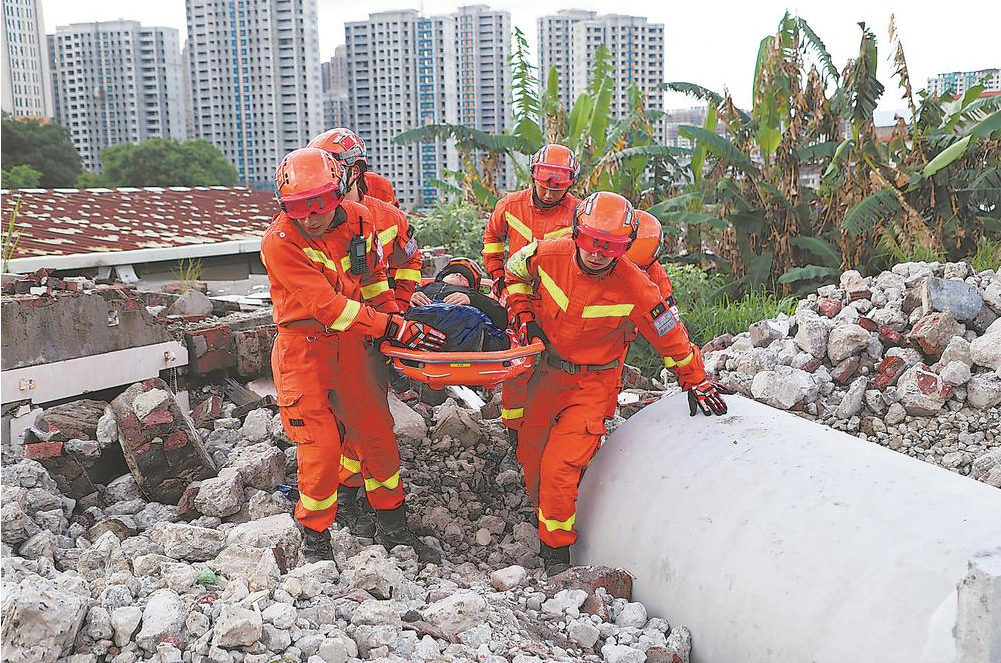
Principle of radar life detection instrument
2022-03-29
sbl
Principle of Radar Life Detection Instrument

Radar is now very commonly used in our lives. Radar is commonly used for positioning, meaning "radio detection and ranging", that is, using radio methods to detect targets and determine their spatial positions. Therefore, radar is also known as "radio positioning". Radar is an electronic device that uses electromagnetic waves to detect targets. Radar emits electromagnetic waves to illuminate the target and receives its echo, thereby obtaining information such as the distance from the target to the electromagnetic wave emission point, the rate of change of distance (radial velocity), azimuth, and height.
The working principle of the life detector is biochemical, dielectric, ultra-low frequency conduction and technology heartbeat sensing. It finds the location of "living people" by sensing the electric field (generated by the heart) generated by the ultra-low frequency radio waves emitted by the human body. After detecting the electric field generated by the ultra-low frequency emitted by the human body, the detection rod will automatically lock this electric field.
So if these two are combined, it is a radar life detector. The radar life detector is a life detection device that integrates radar technology and biomedical engineering technology. It is mainly made using the principle of electromagnetic wave reflection, and detects various micromovements caused by human life activities, obtains information about breathing and heartbeat from these micromovements, and thus identifies the presence or absence of life. The radar life detector is currently the most advanced life detector in the world. Its active detection method makes it less susceptible to the influence of factors such as temperature, humidity, noise, and site terrain. The continuous emission mechanism of electromagnetic signals further enhances its regional detection function.
The ultra-wideband radar life detector is the most advanced type. It has strong penetration ability, can detect the breathing and body movement of buried living bodies, and can accurately measure the distance and depth of buried living bodies. It has strong anti-interference ability and is not affected by environmental temperature, hot objects, and sound interference. It has broad application prospects. The ultra-wideband radar life detector has a large relative bandwidth (the ratio of the signal bandwidth to the center frequency), generally greater than 25%. The test of human life parameters is to irradiate the human body with microwave beams in the form of pulses. Due to the existence of human life activities (breathing, heartbeat, intestinal peristalsis, etc.), the repetition period of the echo pulse sequence reflected by the human body changes. If the echo pulse sequence reflected by the human body is demodulated, integrated, amplified, filtered, and then input into a computer for data processing and analysis, parameters related to the life characteristics of the measured human body can be obtained.
The ultra-wideband radar life detector used for seismic life detection has the advantages of strong penetration, accurate action distance, strong anti-interference ability, strong multi-target detection ability, and high detection sensitivity. The detection distance can reach 30~50m, and the penetration thickness of solid brick walls can reach more than 2m. It can detect people through several rooms and has an automatic human recognition function. It has broad application prospects in the field of life detection. Compared with infrared life detectors and audio life detectors, it is more practical and has therefore become a research hotspot. The development of life detection technology will inevitably expand its application range, such as non-contact life monitoring in medicine, which will save lives and benefit mankind through more ways.

Contact Information
Phone:8618518110097
E-mail:bjsbl_sale@163.com
Address: Room 403, Building B, Xinhua International Center, Huaxiang, Fengtai District, Beijing
- Official Account -
- Business Inquiry -


