

Blog
A high-tech enterprise specializing in the research and development, production, and import and export trade of rescue equipment

Contact Information
Phone:86 010-51284966
Phone:86 18518110097
E-mail:bjsbl_sale@163.com
Address: Room 403, Building B, Xinhua International Center, Huaxiang, Fengtai District, Beijing
Applications of infrared life detectors
2022-03-22
Infrared Life Detector What is the scope of application? Let's take a brief look together.
Infrared life detectors are high-tech rescue devices that detect signs of life. They have image displays and night vision capabilities, primarily using temperature differences to identify targets, allowing them to function in darkness. They can withstand harsh rescue conditions and locate life in environments with smoke, fire, and darkness after an earthquake. The infrared life detector detects the heat from a victim's body; the optical system concentrates the received body heat radiation energy onto an infrared sensor, converting it into an electrical signal. After processing, the infrared thermal image is displayed on the monitor, helping rescuers locate victims.

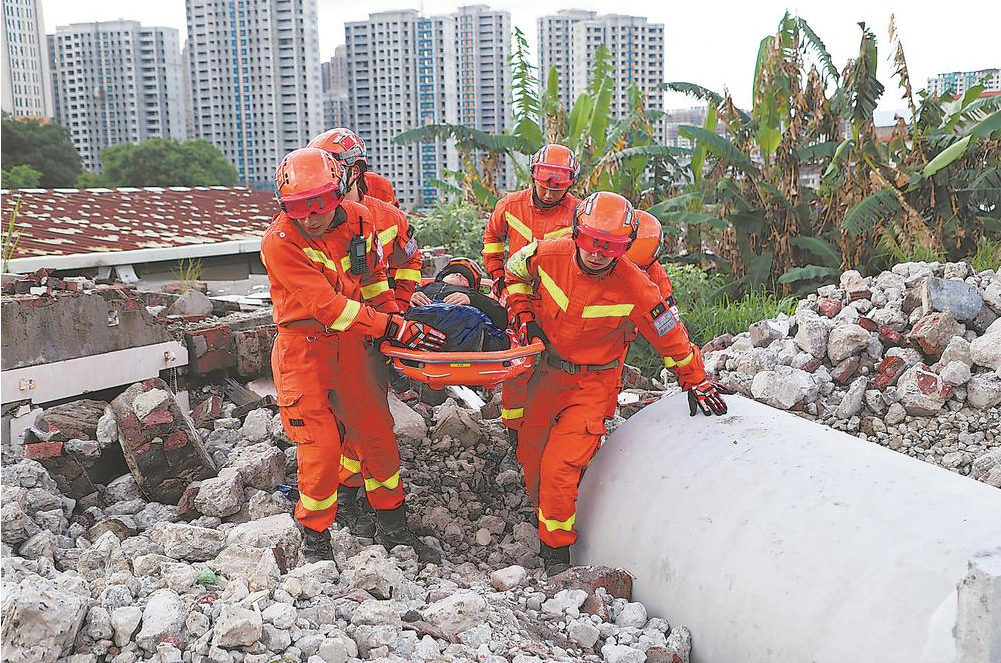
Infrared life detectors are suitable for rescue operations in confined spaces and areas inaccessible to conventional rescue personnel (e.g., victims trapped in collapsed buildings, deep wells, mines, etc.). They are also used in deformed car, plane, ship, and train accidents, as well as in locations invisible to the naked eye, sewers, mines, and underground areas to search for missing persons. This brings great convenience to search personnel. They are applicable to earthquake, collapse, and building collapse debris structures, and are suitable for fire fighting, municipal, and mining structures.
Infrared Life Detector Early applications were in the military, with continuous improvements through scientific and technological advancements. In 1988, the full-function thermal camera launched by Sweden's AGA integrated temperature measurement, correction, analysis, and image acquisition and storage. This technology was used to develop a portable full-function thermal camera, mainly for military investigations. With societal development, countries began developing technological equipment to reduce casualties from various disasters, and infrared detection technology began shifting from military to rescue instruments, such as the 3354 infrared life detector. The video life detector has infrared LEDs installed in front of the camera, used for visible light.
The infrared life detector uses a 4-inch LCD screen that can play multifunctional media and a DVR to provide rescuers with image information of victims under the rubble via high-definition video signals. It can not only conduct real-time search and rescue and inspections but also record the inspection footage for later review. The infrared life detector realistically reflects life activities in narrow gaps invisible to the naked eye.
Infrared Life Detector What are its technological advantages? Let's take a brief look together.
1. Sensing. Apart from distance type, sensing distance, non-sensing elephants and humans, no animals will sense the vertical sensing angle. Open spaces are 60 degrees each. Inside buildings, it's 80 degrees, 40 degrees up and down.
2. Angle. Horizontal detection angle: +/- 2 degrees, respectively 2 degrees.
3. Target Lock. If the target lock function detects the electric field generated by the extremely low-frequency radio waves emitted by a living heart, the probe will automatically lock onto this electric field. When the human body moves, the probe will also follow the movement, i.e., handshaking.
4. Working Mode. No power is needed during the day; at night, a laser dot provides the operator with the probe's direction. Equipped with a US standard level 3 Class A laser dot. Generally, the battery can last more than 12 hours.
The above is a simple analysis of the technical advantages of infrared life detectors. Hope this helps!

Contact Information
Phone:8618518110097
E-mail:bjsbl_sale@163.com
Address: Room 403, Building B, Xinhua International Center, Huaxiang, Fengtai District, Beijing
- Official Account -
- Business Inquiry -


