

Blog
A high-tech enterprise specializing in the research and development, production, and import and export trade of rescue equipment

Contact Information
Phone:86 010-51284966
Phone:86 18518110097
E-mail:bjsbl_sale@163.com
Address: Room 403, Building B, Xinhua International Center, Huaxiang, Fengtai District, Beijing
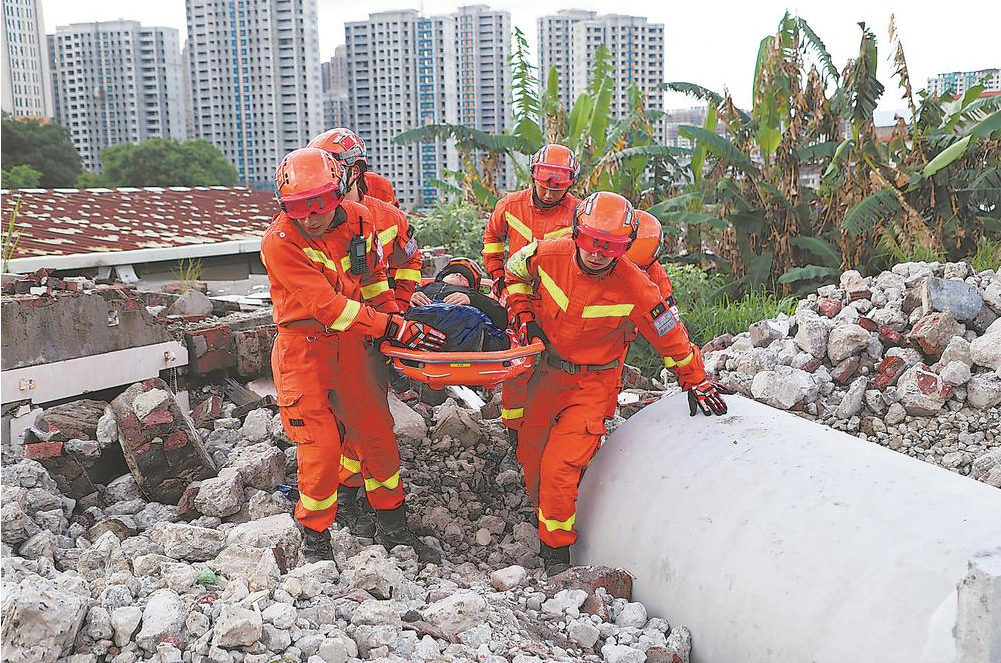
Infrared life detector manufacturers explain how sonic detectors and radar detectors work.
2021-09-16
Infrared life detector manufacturers explain how acoustic detectors and radar detectors work.
Infrared life detector manufacturers: How do different types of life detectors, such as acoustic detectors and radar detectors, work?
Living people have vital signs, body temperature, breathing, and minds, producing carbon dioxide gas. These are used as the basis for life detectors to judge survivors. Here, we will look at how different types of life detectors work specifically.
Infrared life detector manufacturers: Characteristics of acoustic detectors and radar detectors
1. Acoustic detectors can detect faint sounds such as heartbeats, breathing, and movement from survivors buried deep in rubble. Its structure captures sound wave vibration signals through a microelectronic processor. The acoustic detector casts a wide net, then gradually narrows it to pinpoint the survivor's location. Due to the high sound conductivity, even if a person is trapped under a large area of concrete, as long as there is slight movement of the heart rate, it can usually be detected. However, like carbon dioxide detectors, acoustic detectors will also pick up animal sounds. Acoustic detectors are also susceptible to ambient broadband noise.
2. Radar detectors are more "intelligent" than acoustic detectors, capable of accurately locating people in rubble. Additionally, the detection distance in open spaces such as concrete walls, steel doors, and trees can reach 500 meters. However, the detection distance is reduced when the equipment encounters these obstacles. Its working principle is to detect the ultra-low-frequency radio waves emitted by the human heart. However, the rubble of buildings can easily affect the detection effect.
3. Far-infrared detectors: The human body has a certain body temperature compared to other objects. This detector uses the temperature difference to distinguish survivors. Any object with a temperature above zero degrees will produce infrared radiation, and the human body is also a natural source of infrared radiation. However, the infrared radiation characteristics of the human body are different from those of the surrounding environment. Infrared life detectors utilize this difference to separate the target from the background through image processing, but glass isolates the thermal energy signal of the human body.
4. Optical detectors are generally used in conjunction with search and rescue dogs or other detectors. Optical detectors are also known as "snake eyes." Like an endoscope used for medical examinations, they can clearly see the terrain deep within the rubble. The optical detector is tubular and very flexible, allowing it to twist freely in the rubble. A small probe at the front of the instrument can enter small gaps for detection. Like a camera, it transmits images, helping to understand the environment where trapped rescuers are located.
Infrared life detector manufacturers: Conclusion Each life detector has different usage methods, but with the popularization of the usage methods of life detectors in this article, we have also lent a helping hand in emergencies, reducing the number of people who cannot be contacted to a minimum.
Contact Information
Phone:8618518110097
E-mail:bjsbl_sale@163.com
Address: Room 403, Building B, Xinhua International Center, Huaxiang, Fengtai District, Beijing
- Official Account -
- Business Inquiry -


