

Blog
A high-tech enterprise specializing in the research and development, production, and import and export trade of rescue equipment

Contact Information
Phone:86 010-51284966
Phone:86 18518110097
E-mail:bjsbl_sale@163.com
Address: Room 403, Building B, Xinhua International Center, Huaxiang, Fengtai District, Beijing
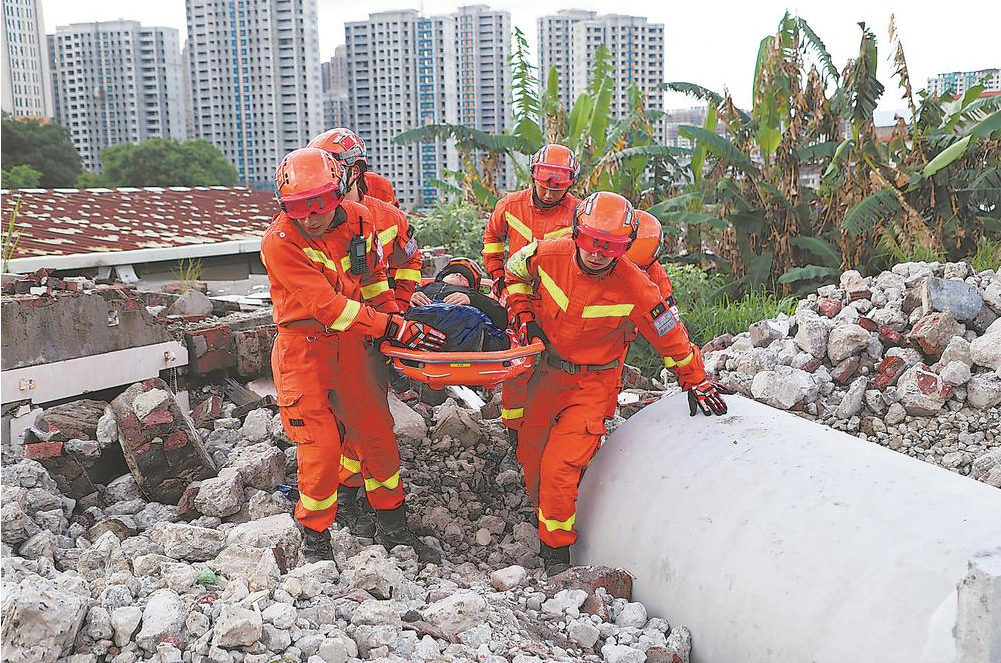
This explains the principles and characteristics of infrared life detectors.
2021-09-03
An explanation of the principles and characteristics of infrared life detectors
An explanation of the principles and characteristics of infrared life detectors
What is the principle of a life detector? How can the probability of being detected by a detector during a disaster be improved?
Infrared detection: Any object with a temperature above absolute zero emits infrared radiation. The human body is also a natural source of infrared radiation. However, the infrared radiation characteristics of the human body differ from those of the surrounding environment. By using imaging, the target and background are separated. The central wavelength of the concentrated infrared radiation energy of the human body is 9.4m, and the infrared radiation range of human skin is 3~50m. It can withstand harsh conditions at rescue sites.
In the smoky, fiery, and dark environments after an earthquake, infrared detectors detect the heat from the bodies of victims. The optical system focuses the received thermal radiation energy onto an infrared sensor, converting it into an electrical signal to help rescuers locate the victims. (Maintain body temperature and reduce heat loss) Voice detection: Voice life detectors use the principles of sound waves and vibration waves. They use advanced microelectronic processors and voice/vibration sensors to collect comprehensive vibration information, detecting various sound waves carried by air and vibrations carried by other media. The receiving frequency range is 1~4000Hz. After the host receives the target signal, it is amplified again. In this way, by detecting the faint sounds and vibration waves of trapped people such as moans, screams, crawling, and knocking, the existence of life can be determined.
An infrared life detector is a life detection device that integrates radar technology and biomedical engineering technology. It identifies the presence of life by obtaining information about respiration and heartbeat from micromovements.
The infrared life detector is currently the most advanced life detector in the world. Using an active detection method, it is not easily affected by temperature, humidity, noise, and site terrain. The continuous emission mechanism of electromagnetic signals further enhances the regional detection function. If you are buried after an earthquake, please do not give up hope of life, please do not give up hope for life, please do not give up hope for life.
I won't go into further detail. If you have any other questions, feel free to call our website customer service. Our company has professionals to answer your questions. You can follow our company; more industry knowledge and company activities will be released in the first time. In addition, our company is a high-tech enterprise specializing in the research, development, production, and import and export trade of rescue equipment in China. Currently, our products and services cover military and police counter-terrorism, fire rescue, and municipal security. Many of our technologies are jointly developed with the Armed Police Officer Academy. We have an independent R&D base and production workshop. I wish you all good health and a happy day!
What is the principle of a life detector? How can the probability of being detected by a detector during a disaster be improved?
Infrared detection: Any object with a temperature above absolute zero emits infrared radiation. The human body is also a natural source of infrared radiation. However, the infrared radiation characteristics of the human body differ from those of the surrounding environment. Infrared life detectors utilize these differences, separating the target from the background using imaging. The central wavelength of the concentrated infrared radiation energy of the human body is 9.4m, and the infrared radiation range of human skin is 3~50m, with 8~14m accounting for 46% of the total human body radiation energy. It can withstand harsh conditions at rescue sites.
In the smoky, fiery, and dark environments after an earthquake, infrared detectors detect the heat from the bodies of victims. The optical system focuses the received thermal radiation energy onto an infrared sensor, converting it into an electrical signal. After processing, the infrared thermal image is displayed on the monitor to help rescuers locate the victims. (Maintain body temperature and reduce heat loss) Voice detection: Voice life detectors use the principles of sound waves and vibration waves. They use advanced microelectronic processors and voice/vibration sensors to collect comprehensive vibration information, detecting various sound waves carried by air and vibrations carried by other media. A high-sensitivity audio life detector with non-target uses two-stage amplification technology. The probe has a built-in frequency amplifier, with a receiving frequency range of 1~4000Hz. After the host receives the target signal, it is amplified again. In this way, by detecting the faint sounds and vibration waves of trapped people such as moans, screams, crawling, and knocking, the existence of life can be determined.
An infrared life detector is a life detection device that integrates radar technology and biomedical engineering technology. It mainly uses the principle of electromagnetic wave reflection. By detecting various micromovements caused by human life activities, it obtains information about respiration and heartbeat from these micromovements to identify the presence of life.
The infrared life detector is currently the most advanced life detector in the world. Using an active detection method, it is not easily affected by temperature, humidity, noise, and site terrain. The continuous emission mechanism of electromagnetic signals further enhances the regional detection function. If you are buried after an earthquake, please do not give up hope of life, please do not give up hope for life, please do not give up hope for life.
That's all for today's explanation. I hope it's helpful! Have a nice day!
Contact Information
Phone:8618518110097
E-mail:bjsbl_sale@163.com
Address: Room 403, Building B, Xinhua International Center, Huaxiang, Fengtai District, Beijing
- Official Account -
- Business Inquiry -


